OAT Organic Chemistry Specification Changes: What to Study Now
The Optometry Admission Test's organic chemistry specifications are being reorganized with simpler topic names and a fuller subtopic list, but the tested content is stable. Here is what changed and how to adjust.
OAT Organic Chemistry Specification Changes: What to Study Now
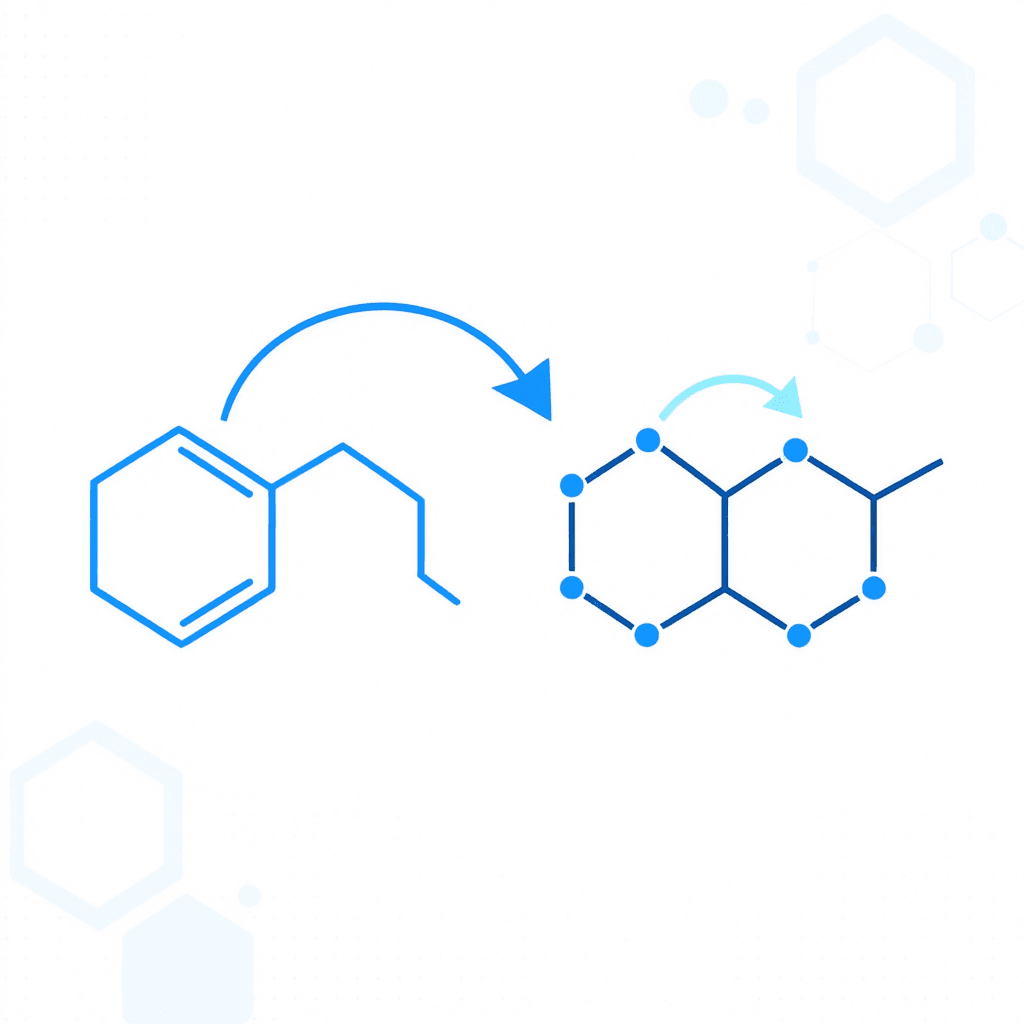
Updates to the Optometry Admission Test (OAT) Organic Chemistry Test Specifications are anticipated in June 2026. The tested content is not changing in any major way: topic names are becoming simpler and the subtopic list is getting more explicit. Study the same core material, lead with mechanism logic, and check which specifications apply to your test date.
Every few years a specification update sends student forums into a spiral, and the organic chemistry update to the Optometry Admission Test is no exception. Here is the calm, factual version: what is changing, what is not, and how to adjust your prep so the update works for you instead of against you. For the full orgo strategy, see our chemistry study guide.
What Is Actually Changing
According to the official OAT program, updates to the Organic Chemistry Test Specifications are anticipated in June 2026. Two key facts from the official announcement:
- The updates do not represent major changes to tested content. The material you need to know is stable.
- The topic names are simpler and more intuitive, and the subtopic list is more comprehensive. The blueprint is being rewritten for clarity, not rebuilt for difficulty.
One rule matters above all: the specifications in effect on your test date are the ones that apply to you. If you test before the implementation date, the current specs govern. If you test after, the updated specs govern. Check the OAT website as your date approaches.
The New Framework, Translated
The updated specifications reorganize organic chemistry into a cleaner structure. Here is what the new buckets mean in plain language:
- Mechanisms. Curved-arrow formalism and single-step mechanisms: resonance, free radical processes, proton transfers, additions, eliminations, substitutions, and rearrangements, plus others like Diels-Alder.
- Combined mechanisms. Multi-step sequences that chain the single steps together. If you understand the single steps, the combinations follow.
- Reaction coordinate diagrams. Energy vs. reaction progress: intermediates, transition states, and what thermodynamics vs. kinetics look like on a graph.
- One-step reactions. The product-prediction core: SN1, SN2, E1, E2, reactions of alkenes and alkynes, alcohols, ethers (including epoxides), radical reactions, aromatics, carboxylic acids and derivatives, and ketones and aldehydes.
If that list looks familiar, it should. It is the same organic chemistry you have been studying, labeled more clearly.
Before and After at a Glance
Here is what the June 2026 update means in practical terms:
- Tested content: First-year organic chemistry. No change. Same content, no major additions.
- Topic naming: Legacy labels are becoming simpler and more intuitive.
- Subtopic detail: Broader categories are shifting to a more comprehensive, explicit subtopic list.
- Structure: Topic areas are reorganizing into mechanisms, combined mechanisms, reaction coordinate diagrams, and one-step reactions.
- Prep impact: Study the same core content, just organized more clearly.
What Did Not Change
The fundamentals that dominate the Optometry Admission Test are untouched:
- Only about 30% of the subtest requires specific reaction recall. The rest is conceptual: properties, stability, stereochemistry, spectroscopy, and reasoning.
- The high-yield conceptual items remain: aromaticity, resonance, carbocation and radical stability, acidity rankings, leaving-group quality, stereochemistry (R/S, E/Z, meso), and IR/NMR interpretation.
- The core mechanisms remain: SN1, SN2, E1, E2, radical halogenation, and acid-base chemistry.
Students who prepare with mechanism logic instead of memorizing 200 disconnected reactions are insulated from specification changes entirely. That is the real lesson of the update.
How to Study Through the Transition
Whether your test date falls before or after implementation, the winning approach is identical:
- Learn the mechanism families first. Proton transfer, substitution, elimination, addition. Once you can follow electron flow, individual reactions become examples instead of memorization.
- Drill reaction recognition both directions. Given starting material, predict the product. Given product, identify the reagent. Reaction sheets and flashcards make this fast.
- Prioritize stability rankings. Acidity, carbocation stability, and radical stability questions appear far more often than students expect.
- Do not neglect spectroscopy. IR and NMR interpretation are reliable scoring opportunities that many students under-train.
- Verify against the official spec for your date. Five minutes on the OAT website removes all guesswork.
Why Updates Like This Are Actually Good News
A clearer specification is a gift to prepared students. The more explicit the blueprint, the less you waste on content that will never be tested. This is also where exam-specific prep separates itself from generic study: a platform aligned to the official specifications absorbs the update for you, while a pile of random PDFs leaves you guessing which version you are reading.
Our Recommendation
The June 2026 organic chemistry update reorganizes and clarifies the specifications without changing the tested content in any major way. Confirm which specs govern your test date, lead with mechanism logic, and drill reaction recognition. A prep platform that tracks specification updates can save you the guesswork, but honestly, five minutes on the official OAT website and a focus on mechanisms will keep you aligned no matter what. Do that, and the update is a non-event.
Ready to crack the OAT?
Crack the OAT gives you 10 full-length practice tests, 10,000+ exam-style questions, 100+ hours of video crash courses, 50,000+ flashcards, and a complete study engine: Adaptive Quiz Generator, Adaptive Flashcard Generator, AI Tutor, Homework Helper, YouTube Summarizer, and Study Schedule Creator. Everything is aligned to the official OAT blueprint and comes with unlimited tokens, unlimited credits, no throttling, unlimited access, and unlimited usage. No subscriptions, no usage caps.
No credit card required for the free trial. One-time payment for full access.
Related articles
OAT Physics Study Guide: Formulas, Concepts, and Practice Strategy
Physics has the lowest national mean of any Optometry Admission Test section at 282.2, but the topic list is finite. Here is the complete strategy: formulas, topic weighting, problem-solving method, and a four-week ramp.
Section GuidesOAT Biology Review: High-Yield Topics for the Natural Sciences Section
On the Optometry Admission Test, biology opens the Survey of the Natural Sciences with questions 1 through 40, and it rewards breadth over depth. Here are the six domains and the active recall system that makes them stick.
Section GuidesOAT General Chemistry and Organic Chemistry Study Guide
The Optometry Admission Test packs 30 general chemistry and 30 organic chemistry questions into 90 minutes with no calculator. Here are the high-yield topics, the drill methods, and the pacing strategy for both halves.
Turn strategy into a top OAT score
10 full-length OAT tests, 10,000+ questions, 100+ hours of video, and unlimited AI tools. Start today.
Unlock Everything