OAT Test Day Checklist: What to Bring and What to Expect
Everything that happens on Optometry Admission Test (OAT) test day: check-in, lockers, whiteboards, the 30-minute break, section timing, and the rules that have gotten real students' exams terminated.
OAT Test Day Checklist: What to Bring and What to Expect
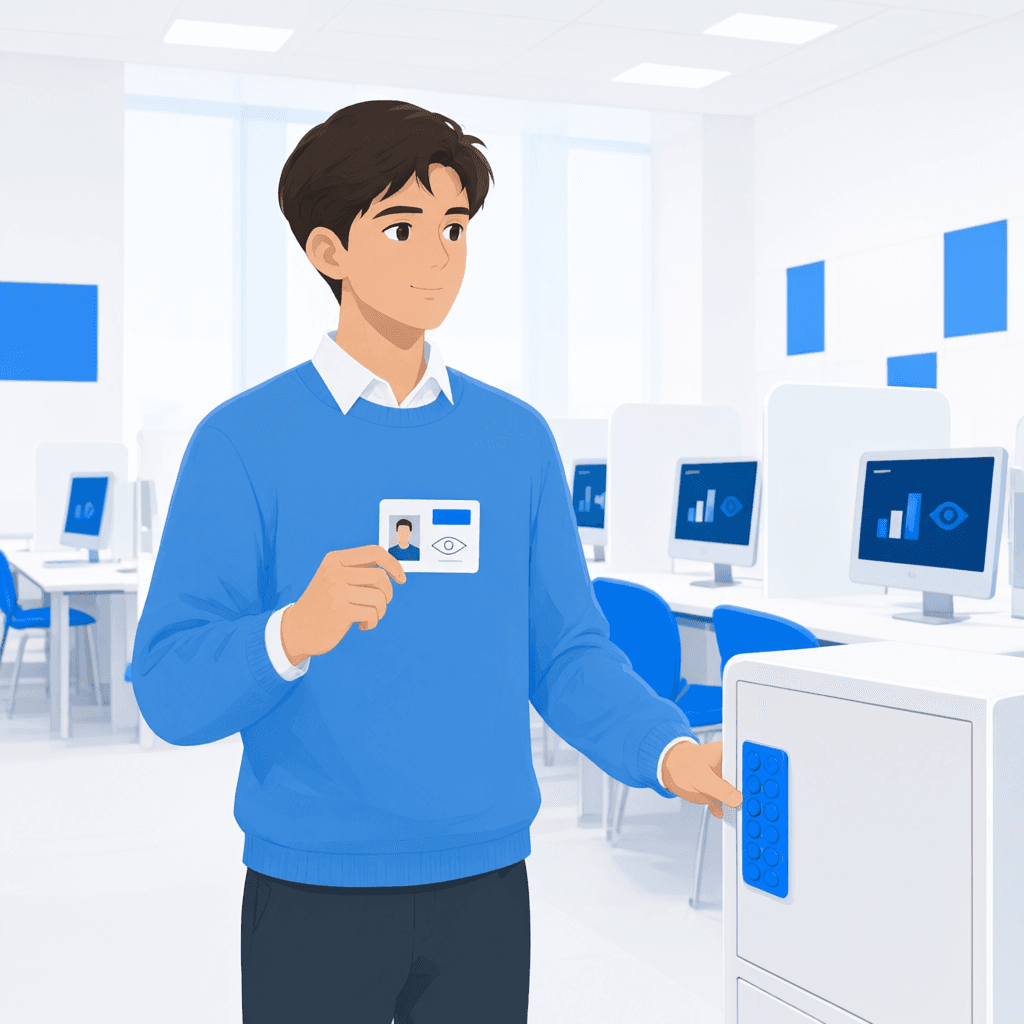
For the Optometry Admission Test (OAT), bring a government-issued photo ID that matches your application name exactly, arrive 30+ minutes early, and expect check-in, a locker, two whiteboards, and a five-hour appointment with one 30-minute break after Reading Comprehension. Never look at notes during breaks: students have had exams terminated for it.
Most test-day disasters on the Optometry Admission Test are administrative, not academic. Wrong ID, late arrival, a prohibited glance at notes during the break. Students who know the flow in advance spend zero energy on logistics and all of it on the exam. This checklist covers the entire day, verified against the official OAT Candidate Guide and real student reports. For the strategy side, see our complete OAT exam guide.
What to Bring
- Government-issued photo ID (driver's license or passport) with your name matching your OAT application exactly. A mismatch means denied admission and a forfeited $520 fee.
- Confirmation of your appointment. Know your date, time, and center address.
- Snack and water for the break, stored in your locker.
- Layers. Testing room temperatures vary.
Everything else stays in the locker: phone, watch, food, candy, beverages, pens, pencils, wallets, keys, jackets. The center provides what you need for the exam itself.
The Check-In Flow
Arrive at least 30 minutes early. The sequence is consistent across Prometric centers:
- Tell staff you are there for the Optometry Admission Test and review the rules sheet.
- Fingerprint, photo, and signature.
- Locker assignment for all personal items.
- Escort to the testing room: a room of cubicles with other candidates taking different exams.
If they offer noise-canceling headphones or earmuffs, take them. A neighbor's keyboard during your physics section is a distraction you do not need.
Consider booking the Prometric Test Drive before your real date. It is a 30-minute rehearsal of check-in and the testing interface, and students consistently say it defuses first-time nerves.
Whiteboards and the Brain Dump
You get two whiteboard sheets and markers at a time; trade used sheets for fresh ones at the break. They do not erase well, so plan your space.
A tactic many top scorers use: during the optional 15-minute tutorial, before the exam starts, dump every physics formula and orgo pattern you memorized onto the whiteboard from memory. You then have a legal, self-made reference for the rest of the exam, written when your mind was fresh. You can refresh it at the break.
The Administration Schedule
Know the shape of the day before you live it. The full appointment runs about 5 hours and 5 minutes:
- Tutorial (optional): 15 minutes.
- Survey of the Natural Sciences: 90 minutes.
- Reading Comprehension: 60 minutes.
- Scheduled break (optional): 30 minutes.
- Physics: 50 minutes.
- Quantitative Reasoning: 45 minutes.
- Post-test survey (optional): 15 minutes.
One interface detail that calms students: items load one at a time, and you may notice a brief lag between them. The timer pauses while items load, so loading time never counts against you.
The 30-Minute Break: Rules That Matter
The only scheduled break comes after Reading Comprehension. The rules:
- Raise your hand and a proctor escorts you out.
- The session auto-resumes at 30:00 whether or not you are seated. Return about 10 minutes early, because you clear security again to re-enter.
- Locker access is allowed at the scheduled break for your snack and water.
- Never open notes or study materials during any break. One student had their exam terminated on the spot for reviewing notes during the break and had to escalate to the OAT Program to clear it up. It is not worth it.
- Unscheduled breaks (bathroom during a section): the clock keeps running, and you may not access your locker, phone, food, or notes. Save it for the real break.
During the Exam
- Mark and move. Every section has a mark-for-review tool. If a question is not resolving in about a minute, mark it and go.
- Answer everything. There is no guessing penalty. Blanks are free points thrown away.
- Use the highlight tool in RC for names, numbers, and definitions. There is no Ctrl+F.
- Watch the section clock, not the room. Other candidates are on different exams with different timing. Their pace is irrelevant to yours.
If Something Goes Wrong
If there is a problem with your testing conditions (hardware failure, disruption, power issue), notify the test administrator immediately. Do not suffer through it silently. Concerns that cannot be resolved at the center must be submitted in writing within five business days of your appointment, per the Candidate Guide.
The 48 Hours Before
- Two to three days out, leave the forums. Reddit and SDN threads before the exam create anxiety, not clarity. This is one of the most common pieces of advice from high scorers.
- The night before: sleep over study. No new material after dinner.
- Morning of: a familiar breakfast, nothing exotic. Arrive early enough that traffic is an inconvenience, not a crisis.
After the Exam
You will receive your unofficial score report at the test center before you leave. Official scores go to your designated programs within three to four weeks. If the day did not go your way, our retake policy guide and score recovery plan walk you through the next move.
Our Recommendation
Match your ID to your application, arrive 30 minutes early, take the headphones, brain-dump your formulas during the tutorial, guard the 30-minute break, and never touch notes. A prep platform that simulates the full Prometric experience can make test day feel routine, but honestly, a single Prometric Test Drive and a good night's sleep do most of the work. Handle the logistics cold, and the only thing left to think about is the Optometry Admission Test itself.
Ready to crack the OAT?
Crack the OAT gives you 10 full-length practice tests, 10,000+ exam-style questions, 100+ hours of video crash courses, 50,000+ flashcards, and a complete study engine: Adaptive Quiz Generator, Adaptive Flashcard Generator, AI Tutor, Homework Helper, YouTube Summarizer, and Study Schedule Creator. Everything is aligned to the official OAT blueprint and comes with unlimited tokens, unlimited credits, no throttling, unlimited access, and unlimited usage. No subscriptions, no usage caps.
No credit card required for the free trial. One-time payment for full access.
Related articles
OAT Retake Policy: 60-Day Wait, 3-Attempt Rule, and Permission Process
The Optometry Admission Test (OAT) requires a 60-day wait between attempts, caps you at 4 attempts per 12 months, and requires written permission after your third attempt. Here is the current policy, step by step.
Test Day & RetakesWhat to Do If You Fail the OAT: Retake Strategy and Score Recovery
A bad Optometry Admission Test (OAT) score is a diagnosis, not a verdict. Here is the step-by-step recovery plan students have used to jump 30 to 40 points, and the mistakes that keep repeat testers stuck.
Turn strategy into a top OAT score
10 full-length OAT tests, 10,000+ questions, 100+ hours of video, and unlimited AI tools. Start today.
Unlock Everything